
Hi everyone and welcome to the ElearnInsight. We are going good with our technical content. And we need to keep up with it. As we are taking care of our knowledge, we also need to take care of our health. Herewith you will find the contents on fitness and well-being under the ‘Health and Fitness’ category.
We all are busy in today’s fast-paced world, and in such an environment, health and well-being matter more than ever. We need a healthy lifestyle, which will give us energy, focus, and confidence. Can we build one? Why not? There are many ways, but among them all, regular exercise stands out as the cornerstone.
Presently, we all are having our health goals. Maybe you want to lose weight. Maybe you want more energy for work or study. Or perhaps you simply want a better quality of life. In every case, a consistent routine of effective workouts can work wonders.
This guide is your step-by-step reference. First, you will see why workouts matter. Next, you will understand their key benefits. Then you will explore different workout types and follow seven practical tips. Whether you are a student, a health enthusiast, or a busy professional, you can start today.
Importance of Workouts for a Healthy Lifestyle
Healthy living and lifestyles rest on three pillars. Is it? Obviously yes, a strong body, a calm mind, and a long life. Exercise supports all these three pillars.
1. Physical Health
Regular exercise is very important to maintain a healthy weight. It also lowers your risk of chronic diseases such as heart disease and type 2 diabetes. In addition, it improves your cardiovascular fitness.
The World Health Organization advises adults to get 150 to 300 minutes of moderate activity each week. Many adults around the globe fall short of this goal. However, you can close the gap with small, steady steps. Even walking plays a great role as an activity.
2. Mental Well-being
When people perform physical exercise, they feel good. Physical activity releases endorphins. People call them “feel-good” hormones. These chemicals reduce stress, ease anxiety, and lift symptoms of depression.
Moreover, exercise improves brain function. Students can think more clearly and, in addition, remember more. Working professionals focus better and handle pressure very well. As a bonus, you sleep deeper at night.
Even a short walk helps when life feels heavy. Therefore, treat exercise as a tool for your mind, not just your body. A 10-minute session can change your whole afternoon.
3. Longevity
Studies consistently show that active people tend to live longer. Even better, they enjoy a higher quality of life as they age. They stay independent and mobile, as well as sharp.
Especially, healthy lifestyles and fitness science send one clear message: you do not need extreme training. You only need a regular movement every day, year after year.
Think of exercise as a daily deposit in your health bank. Each walk, swim, or strength session adds a little. Overall the years, those deposits grow into real protection against illness and weakness.
Benefits of Regular Workouts.
Now let’s look at the workout effects you can expect. Each benefit mentioned below builds on the other benefits.
1. Weight Management
How can we maintain the healthy weight? Chiefly, exercise burns calories. Eventually a balanced diet controls how many you eat. Together, they help you reach and keep a healthy weight.
Remember, you cannot out-train a poor diet. Therefore, pair your workouts with smart food choices. Moreover, a healthy diet for a busy lifestyle can be simple. Cook once on Sunday. Fill half your plate with vegetables. Add lean protein as well as whole grains. Then pack healthy snacks such as nuts, fruit, or yogurt.
2. Improve Cardiovascular Health
Running, swimming, yoga, and cycling strengthen your heart. They also improve circulation. As a result, your blood pressure and resting heart rate often drop.
A heart-healthy lifestyle combines regular cardio with good food. It also means no smoking, less stress, and yearly checkups of blood pressure and cholesterol. Heart health is a leading factor of well-being worldwide. Fortunately, daily good habits can improve your heart health.
3. Enhance Muscle Strength and Flexibility
Resistance training builds muscle mass and increases strength. Meanwhile, stretching improves flexibility and range of motion. Together, they protect your joints and fix poor posture also. This matters most for desk workers. Hours of sitting tighten your hips and, in addition, weaken your back. Strength and stretching sessions reverse that damage. As a result, your body becomes healthy.
Strong muscles also protect your bones. As you age, this protection becomes vital. Therefore, start strength training today and keep it up for life.
4. Boosted Immune system
Regular physical activity can strengthen your immune function. Consequently, you get sick less often. You also recover faster when you do get ill. Moderate exercise works best. Put simply, regular workouts build a stronger, leaner, and more resilient body. Furthermore, you gain confidence with every session you finish. These workout effects add up quickly when you stay consistent.
Type of Workouts & Their Benefits
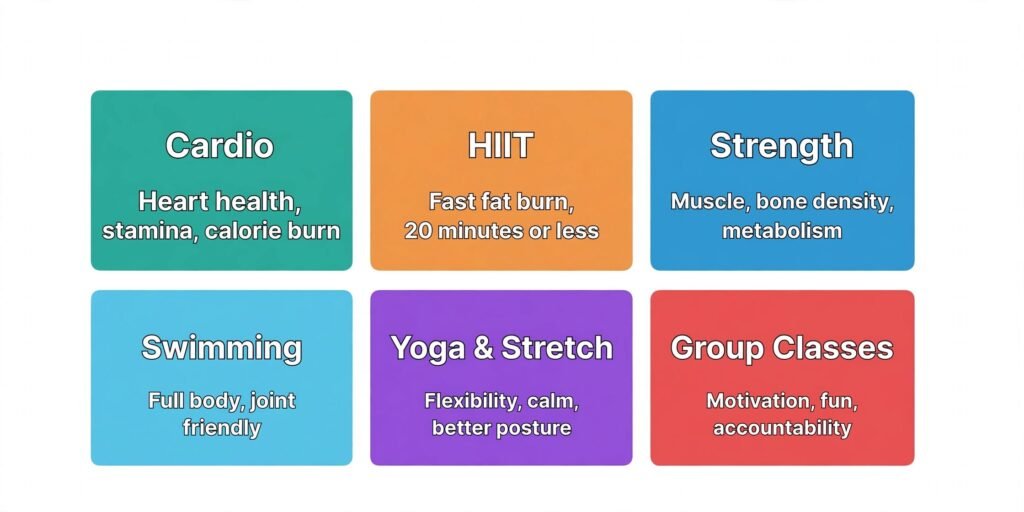
After all, no single exercise does everything. Therefore, the most effective workout plan mixes several types. Here are the main ones.
Cardio
Walking, running, cycling, and dancing raise your heart rate. They build stamina and protect your heart. Try 30 minutes of brisk walking, five days a week.
HIIT
High-intensity interval training uses short bursts of hard work and brief rests. It burns many calories in little time. Effective HIIT workouts at home need no equipment. Try 30 seconds on and 30 seconds off for 15 to 20 minutes.
Strength Training
Dumbbells, bands, or body weight builds muscle and bone density. It also speeds up your metabolism. Try two or three full-body sessions each week.
Swimming
Water supports your weight, so swimming protects your joints. Many coaches recommend swimming workouts for beginners and people with injuries. Try 20 minutes of steady laps, then four fast sets of 50 meters as per your pace.
Yoga and Stretching
These improve flexibility, balance, and calm. Do yoga everyday, stretching every day before & after a workout and meditation before bed.
Group Classes
Spin, Zumba, Pilates, and boot camp add fun and accountability. Which are the most effective workout classes? The ones you enjoy and attend regularly.
Not sure which type to pick? Start with the one that feels easiest to repeat. Then add a second type after two weeks. Finally, build toward a mix of cardio, strength, and flexibility. This gradual approach avoids overwhelm and builds lasting habits.
Meanwhile, these are the most effective workout exercises for any plan: squats, push-ups, lunges, planks, burpees, glute bridges, and rows. They work many muscles at once. Therefore, they save you time.
7 Tips for Effective Workouts
Knowing the benefits is step one. Taking action is step two. These seven tips will help you start and stay consistent.
1. Set Realistic Goals
Define clear, achievable goals based on your fitness level and preferences. Maybe you want to run a 5K. Maybe you want to master a yoga pose. Either way, a goal keeps you motivated. Use the SMART method. Make goals specific, measurable, achievable, relevant, and time-bound. For example, say “I will walk 30 minutes, five days a week, for the next month.” That goal beats “I want to get fit.”
2. Choose Activity You Enjoy
The key to a lasting routine is enjoyment. If you dread your workout, you will quit. So experiment with different exercises until you find what resonates with you. Love music? Try dance classes. Prefer calm? Choose yoga or swimming. Enjoy people? Join a group class or a running club. In short, the best workout is the one you will actually do. Also, try a new activity every month. Variety keeps your routine fresh and your motivation high.
3. Start Slowly and Progress Gradually
Avoid overexertion. Increase the intensity and duration of your workouts step by step. This approach prevents injuries and gives your body time to adapt.
A simple effective workout is enough to begin. Easy, effective workouts also build the habit. Increase your effort by about 10 percent each week. Always warm up for five minutes first.
Try this 20-minute home routine. Do each move for 40 seconds. Rest 20 seconds. Then repeat the circuit twice.
- Jumping jacks (warm-up)
- Bodyweight squats
- Push-ups (knees down if needed)
- Reverse lunges
- Plank hold
- Mountain climbers
- Glute bridges
Effective home workouts like this need only a mat and floor space. Consequently, you have no excuse on a busy day.
4. Mix it Up
Include a variety of exercises. This targets different muscle groups and prevents boredom. Combine aerobic exercise, strength training, and flexibility work for a balanced approach.
The most effective workout plan is the one you can repeat. Use this sample week as your template. Then adjust it to your schedule.
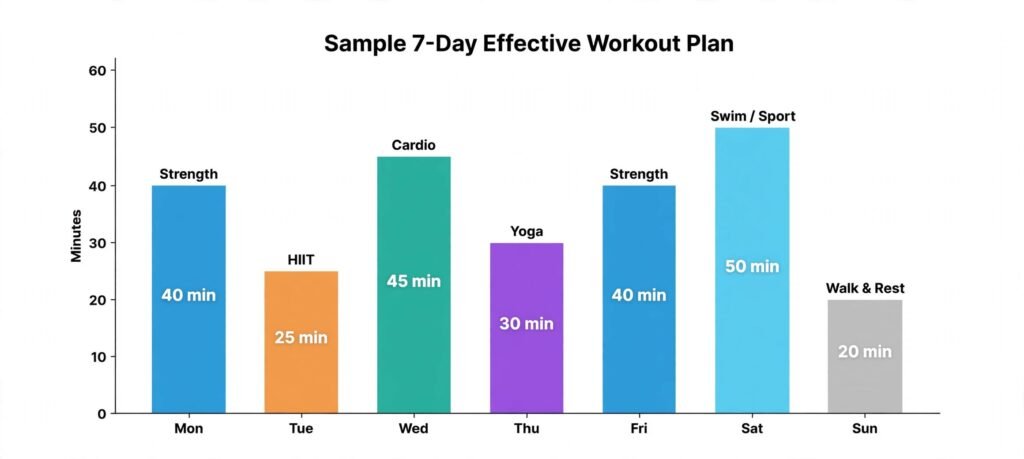
Beginners can start with three days a week. Then they can add one day every two weeks.
5. Stay Hydrated and Eat Well
Drink plenty of water before, during, and after workouts. Fuel your body with nutritious foods that give you energy and support muscle recovery. A pale-yellow urine color is a simple sign of good hydration.
Before a workout, eat a light snack such as a banana or toast. After a workout, eat protein and carbs. For example, try eggs with whole-grain toast or yogurt with fruit.
6. Prioritize Rest and Recovery
Adequate rest is always essential for muscle repair as well as overall recovery. Your muscles grow during rest, not during the workout. So listen to your body and add rest days to your week.
- Take at least one full rest day each week.
- Sleep 7 to 9 hours every night.
- Stretch for five minutes after each session.
- Stop if you feel sharp pain. Mild soreness is normal.
Also, do not skip rest to “make up” for a lazy week. Overtraining can leads to fatigue, injury.
7. Track Your Progress
Keep a workout journal or use a fitness app. Monitor your progress over time. Celebrate your achievements. Then adjust your routine to keep challenging yourself.
Track more than the scale. Note your energy, strength, endurance, mood and sleep. Review your results every month. For example, add a day, raise the weight or try a new class.
Need extra support? Consider healthy lifestyles coaching. A coach gives you a plan, feedback and accountability. Love helping others? A healthy lifestyle coach certification from an accredited body such as ACE, NASM or ACSM can turn your passion into a career. Compare costs, study time and reviews before you enroll. Finally, look for programs that include practical training and career support.
How to Maintain a Healthy Lifestyle Every Day
Workouts work best inside strong daily habits. Here is how to maintain a healthy lifestyle for the long term.
- Move for at least 10 minutes every day.
- Sleep on a fixed schedule.
- Choose whole foods most of the time.
- Manage stress with breathing, journaling or meditation.
- Take short screen breaks every 30 minutes.
- Stay social. Join a walking group or class.
These healthy lifestyle habits seem small. However, they add up fast. Pick one habit this week. Then add another when it feels natural. Forward healthy lifestyles always begin with small steps. And remember progress comes from consistency, not perfection.
Region tip: In hot areas such as the Middle East and parts of Asia, train early in the morning or late in the evening. In colder parts of Europe and the USA, use indoor workouts in winter.
Conclusion: Invest in Your Long-Term Health
Regular workouts are not just about appearance. They are an investment in your long-term health and well-being. Whether you prefer solo gym sessions, outdoor hiking or cycling, or group fitness classes, finding what works for you is the key.
Remember, consistency is the secret to the full benefits of exercise. So lace up your sneakers, grab your yoga mat or hit the trails. Your body and mind will thank you.
Start today. Begin your journey toward a healthier, happier you through the power of exercise. Your future self will thank you for the investment you make in your health now.
Ready to begin? Share this guide with a friend, bookmark it and complete your first 20-minute workout today.
Disclaimer: This article is for general education only. It is not medical advice. Please consult your doctor before you start a new exercise or supplement plan, especially if you have a health condition.